Reading room: New monographs from Australian architects and interior designers
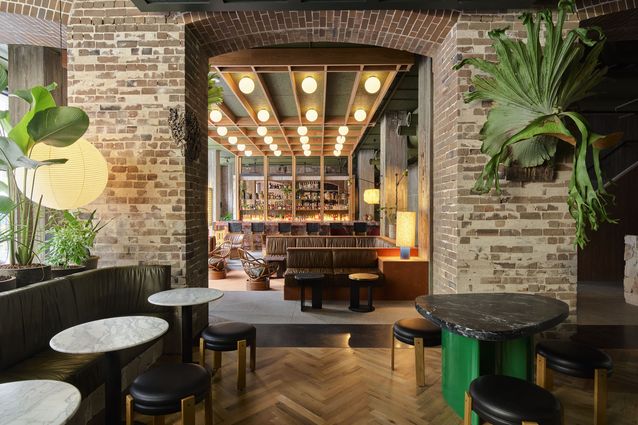
Flack Studio: Interiors
Since founding his studio in 2014, David Flack has honed a design language based on the adventurous and layered use of materials, creating spaces that consistently surprise and engage the eye. Flack Studio: Interiors offers a first look into Flack Studio’s creative process.
With projects across Australia and the US, this monograph showcases the recurring play of colour and texture prevalent across the breadth of the studio’s work. Altogether, the book profiles 13 projects, ranging from the conversion of a Melbourne factory into a cosy residence for pop star Troye Sivan, to the renovation of a farmstead in country Victoria, to the fitout of the Ace Hotel in Sydney.
Flack Studio: Interiors is published by Rizzoli.

Lippmann 1985–2025: 40 Years of Architecture
Marking four decades in practice, this retrospective from Ed Lippmann charts the evolution of his practice from its early residential work through to public landmarks across Sydney and abroad. It features projects including the Andrew “Boy” Charlton Pool in Sydney’s Botanic Gardens and radical urban proposition of 8 Chifley Square, designed by Lippmann Partnership in association with Rogers Stirk Harbour and Partners, and Arup.
The latest monograph is the third book by Ed Lippmann, following the practice’s Architecture for a New Millenium (2000) and Sydney XXXL (2019). Throughout the practice’s 40 years, their enduring commitment to architecture as a civic, cultural and humanist pursuit is evident through an architecture that engages deeply with site, climate and social responsibility.
Lippmann 1985–2025: 40 Years of Architecture is self-published by Lippmann.

Material Wonder: The Interiors of Fiona Lynch
Material Wonder catalogues the work of Melbourne interior designer Fiona Lynch, commemorating two decades of her practice since she turned to interior design, having first studied and trained as an artist.
The book highlights Lynch’s experimental use of finishes, craftsmanship and natural materials, presenting her poetic yet pragmatic design language. Despite the clean lines prevalent across Lynch’s work, the book’s richly layered and textured interiors reveal the quietly complex and tactile design philosophy at the core of her practice: “spirited minimalism meets atmospheric potency,” in her own words.
Material Wonder: The Interiors of Fiona Lynch is published by Thames and Hudson.

Koichi Takada: Naturalising Architecture
In this volume, Sydney-based Japanese architect Koichi Takada showcases a new collection of his practice’s most recent projects that evolve his reflections on reconnecting the natural world with the built environment.
Featuring sketches and nature-inspired imagery alongside photography of the practice’s buildings and interiors, the book guides readers through a global portfolio of work. Projects include a design for a climate-positive residence in Italy called Sunflower House, which has a rotating roof and floors to manage sun exposure and heat gain; the Landmark by Lexus pavilion in Melbourne, featuring 1,000 native Australian plants growing on its facade granting it a carbon neutral certification; and the Palm Frond Retreat at Balmoral Beach in Australia, designed for the inhabitants to use different parts of the house depending on the season and time of day.
Each project illustrates Takada’s study of how the present ecological constraints weigh on the architectural design processes and how the reality of our densely built habitats changes the perception we have of buildings and cities.
Koichi Takada: Naturalising Architecture is published by Rizzoli.

link