Design trends: Flexible, creative spaces draw renters in
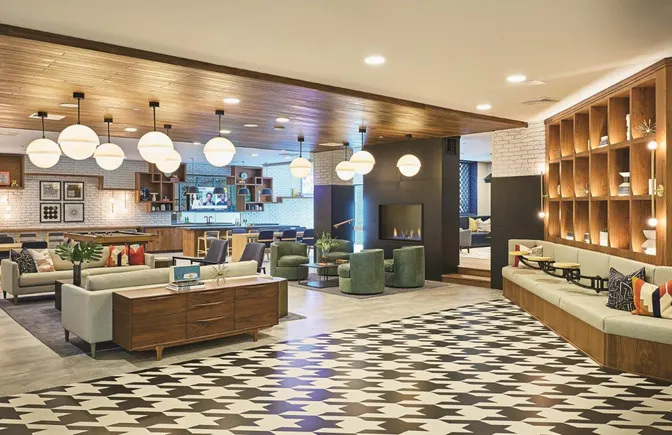
As the multifamily industry moves into 2023, developers and designers have a lot on their plates. Renters are spending more time on site than ever before, COVID-19 continues to influence social gathering patterns and the major renter demographic is changing over from millennials to Gen Z. With these changes in living patterns come new spaces they want to live in — and in order to catch their interest, the industry needs to catch up.
Here are a few of the multifamily design and amenity trends that professionals expect to pay close attention to for this year and beyond.
Flexible spaces
Common spaces that can accommodate more than one type of use are quickly gaining traction with residents, developers and designers alike. “Today’s residents appreciate adaptable, flexible lounges and gathering areas that can serve multiple purposes,” Mary Cook, founder and president of Chicago-based design firm Mary Cook Associates, told Multifamily Dive.
Working from home is the most common flex use. Amenities designed around pleasure can double as workspaces as long as they provide a flat surface, electrical outlets, internet access and a comfortable place to sit. Natalie Hyde, senior interior designer at Seattle-based design firm MG2, has stopped putting dedicated office space in common areas altogether in favor of amenities with flexible work-from-home applications.
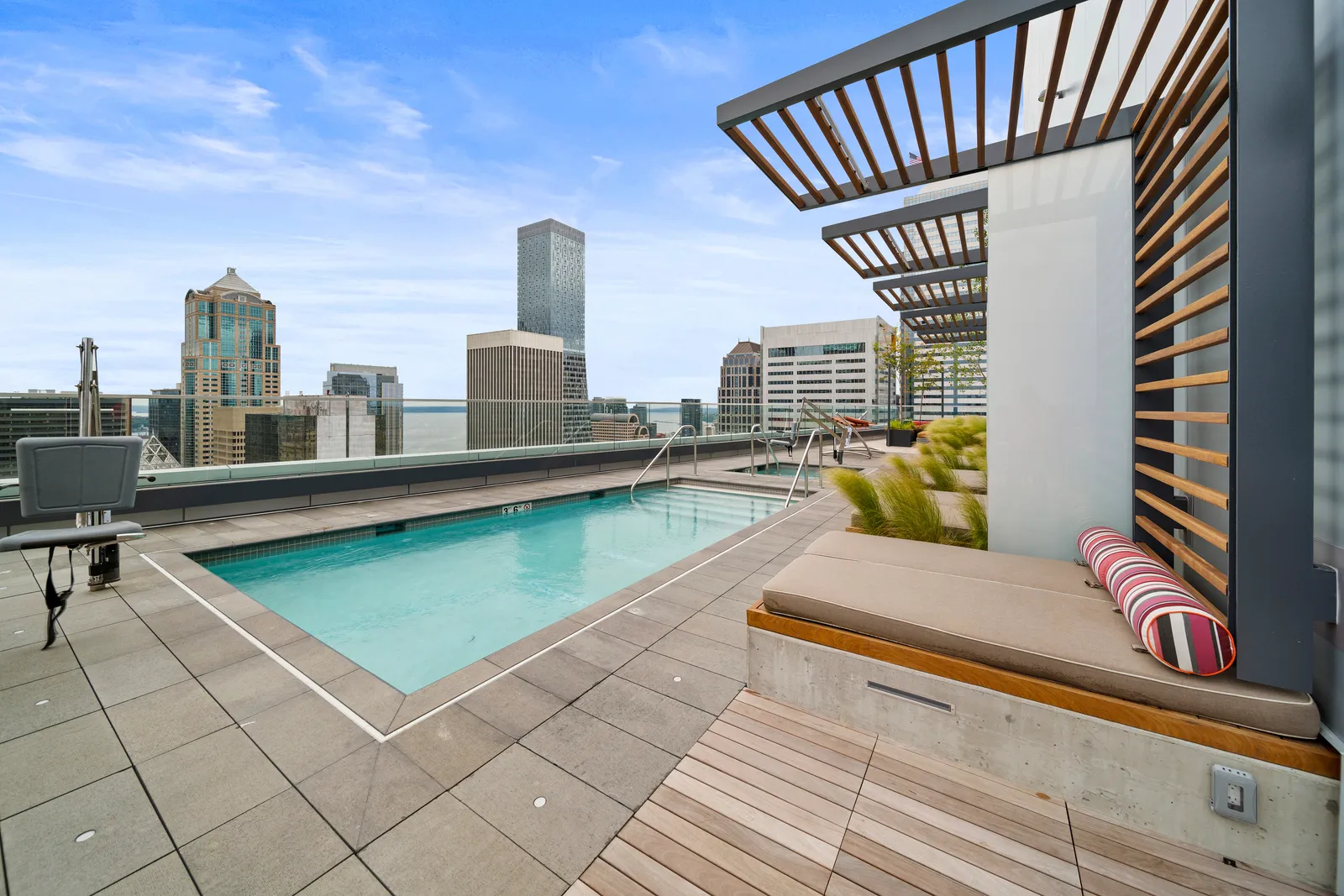
The rooftop pool at Ovation in Seattle, a property developed by Lennar and Quarterra Group with interior design by MG2. Poolsides are among the candidates for flexible work-from-home spaces.
Courtesy Lennar/Quarterra Group Inc.
“Since COVID, residents have found new ways to work at home, including in the lobby, on the rooftop deck and even at the pool,” Hyde said. “Conference space and private ‘pods’ are still in demand, but flexible work locations are now more important. Specific consideration of table heights, seating proportions and clever power locations have been taken into consideration. This is key so that spaces can function in multiple ways.”
Spaces designed around a single activity may find themselves in disuse if the activity ever falls out of favor with future residents, according to Marc Kotler, president of the new development group at the New York office of Dania Beach, Florida-based property management firm FirstService Residential.
“When consulting our clients, we always push for flexible spaces that can have a multitude of uses,” he said. “With single-use amenities, there often less of an opportunity to monetize the space for multiple generations of residents.”
Tech integration
The youngest renter demographic is also the most tech-savvy, and multifamily professionals are taking this into consideration.
“Generation Z is now the largest U.S. demographic group, making up 27% of the population,” Cook said. “[They] tend to embrace the latest technology but also put a high value on social interaction and authentic one-of-a-kind experiences. For them, technology is a medium – but not a genuine replacement – for socialization.”
With technology integrated into almost every aspect of life for Gen Z, new and renovated properties need the infrastructure to support residents’ personal tech use, according to Ted Weldon, executive general manager of Chicago development at New York City-based Lendlease Development.
“Common areas not only need to be designed to appeal to this demographic aesthetically, but also have the infrastructure in place for ultra-high-speed internet,” Weldon told Multifamily Dive.
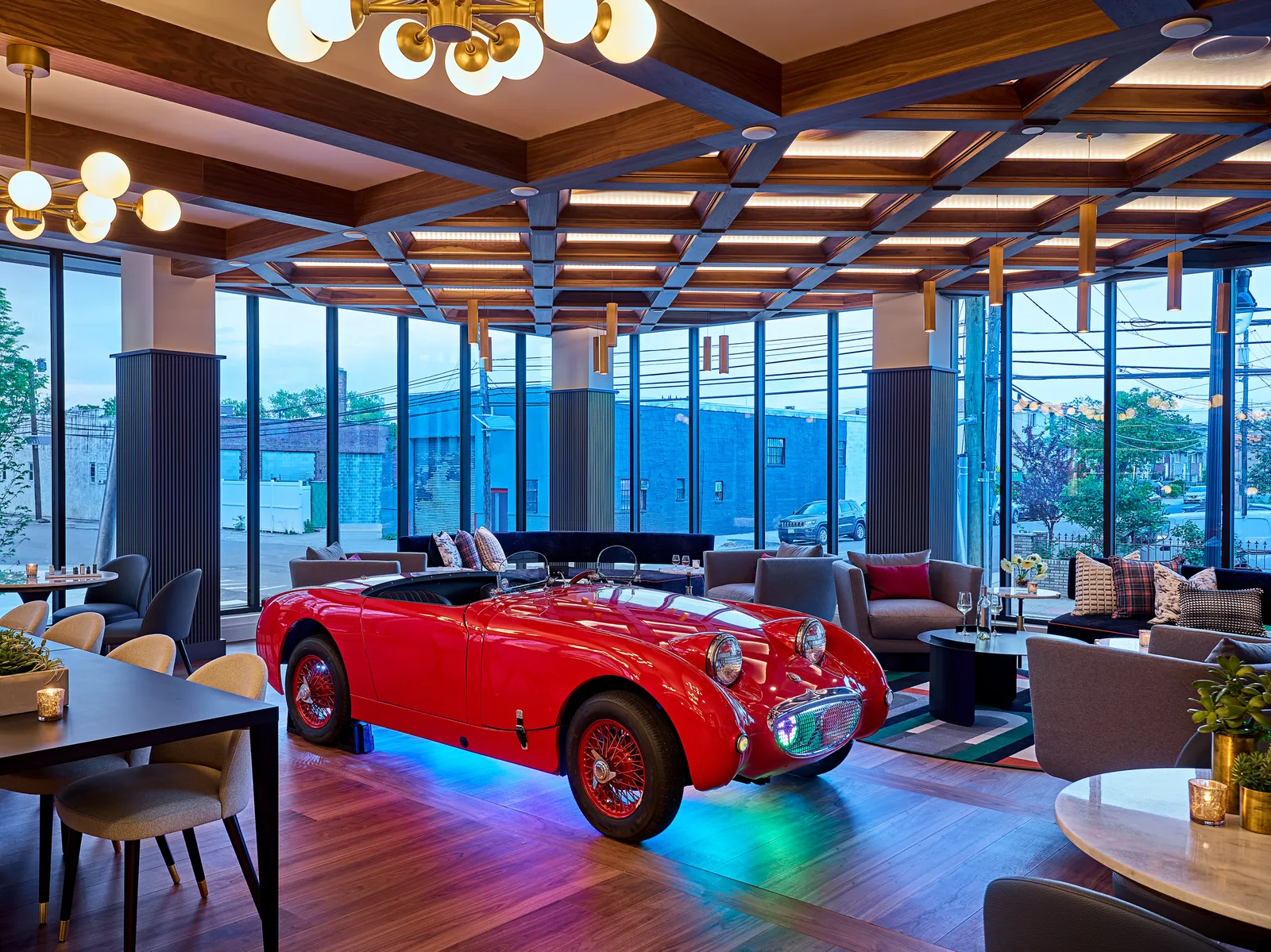
The lounge area at Dey & Bergen features a 1964 Austin-Healey “Bugeye” Sprite sports car as a centerpiece.
Permission granted by Mary Cook Associates
A more peripheral tech consideration is whether or not living spaces are “Instagrammable” — unique, eye-catching or easily shared on social media as a conversation piece. Mary Cook Associates put this into practice at Dey & Bergen, a 242-unit multifamily community in Harrison, N.J., geared toward younger renters, with a speakeasy-style lounge complete with a 1964 Austin-Healey “Bugeye” Sprite sports car as a centerpiece.
“Because young adults are so tech-focused and digitally connected, they are eager to share their experiences,” Cook said. “The vintage sports car serves as a unique conversation piece and a popular subject for social media posts, and is a big hit among residents and guests.”
Places to perform and create
A number of multifamily developers are experimenting with an amenity that meets a very specific niche: places to produce audio or video, particularly for distribution online. This could take the form of a photo studio for social media, a soundproofed recording booth for podcasters as implemented at Broadridge Philly Apartments in Philadelphia; or even a public musical performing space.
Another variation on this trend is makerspaces, where residents can create artwork, crafts or other objects. Gallery 64, a Washington, D.C., community developed by Los Angeles-based developer Lowe and Mitsui Fudosan America, offers a maker space and podcast rooms for residents.
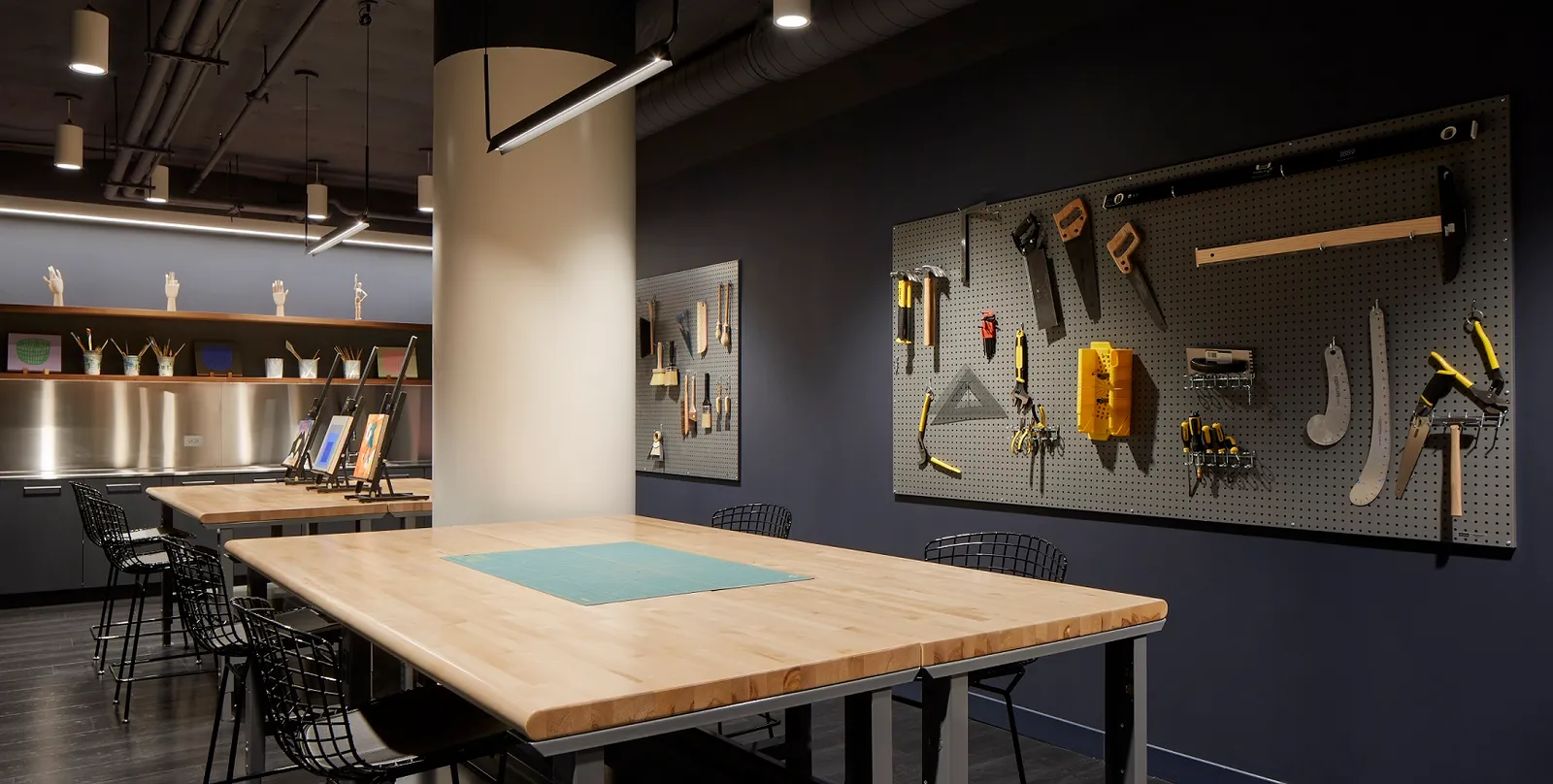
The makerspace at the amenity suite shared by Cirrus, a condominium building, and Cascade, a rental building, both developed by Lendlease in Chicago.
Permission granted by Lendlease
Some professionals are more skeptical about these spaces. Elie Rieder, CEO of Montebello, New York-based developer Castle Lanterra, considers them a niche offering that only work in specific circumstances. “These are ideal for urban communities, where residents trend younger and are more tech savvy,” Rieder said.
Kotler underscored the importance of proper planning for these amenities.
“Makerspaces for woodworkers or painters will quickly become a mess, possibly a hazard, if not properly maintained,” Kotler said. “Music studios or practice rooms, while less hazardous, will create a lot of noise and need to be adequately soundproofed to prevent any disruption to the rest of the residents.”
Outdoor and active spaces
Outdoor living is a trend that has held strong for the last several years, having gained a boost during the COVID-19 lockdown period in 2020. More recent is a growing emphasis on active spaces, whether they are indoor, outdoor or feature an indoor/outdoor connection.
“Outdoor and active spaces will continue to be the number one amenity that residents seek in 2023,” said Philip Carpenter, chief operating officer at Lendlease Communities. “The pandemic amplified residents’ desire to be active and that want is only increasing… We are continuing to create even more of these green spaces on our installations by offering amenities like walking trails, pools and even more extensive athletic centers.”
This has opened up an avenue for more specific fitness amenities that tie into the broader activity offering.
“Our developer clients are adding spaces like yoga studios that double as meditation spaces; steam rooms, saunas and massage rooms adjacent to fitness centers to create a spa-like experience; and indoor/outdoor workout areas,” said Jonathan Delcambre, senior design leader and managing partner in Dallas for Minneapolis-based design firm BKV Group.
link