


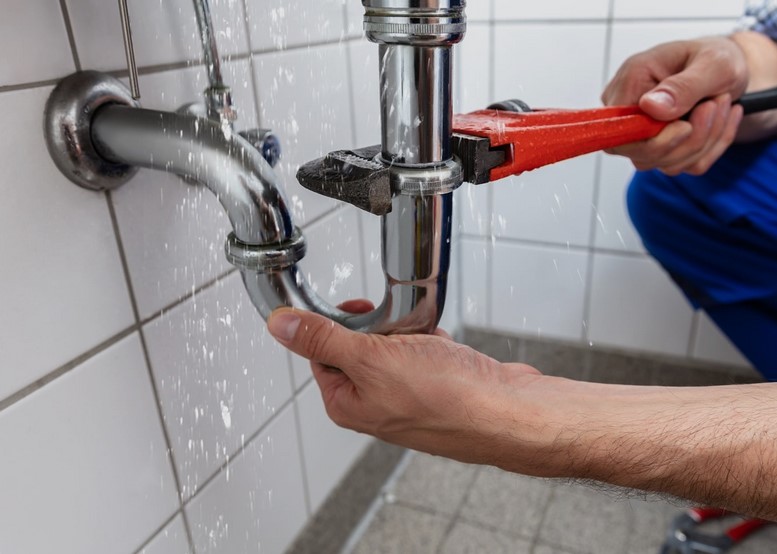
A reliable home water leakage solution does not begin with a tool or a product. It begins with paying attention. Water is a patient adversary that works quietly, finding the smallest gap in a wall cavity, the hairline crack behind a bathroom tile, the imperceptible separation between a pipe fitting and its housing. By the time evidence appears on a ceiling or skirting board, the damage has often been accumulating for weeks. In Singapore, where humidity rarely drops below 70 per cent and rainfall is near-daily, the conditions that accelerate hidden water damage are almost always present.
The encouraging fact is that most household water leakage problems are solvable. What they require is a systematic approach: first identification, then assessment, then the right fix applied in the right sequence.
Where Hidden Leaks Tend to Begin
Water leaks in homes do not occur randomly. They concentrate in predictable locations, shaped by the way buildings are constructed and the points at which plumbing, structure, and finishes intersect.
· Bathrooms and wet areas
Grout lines, tile junctions, and waterproofing membranes in shower enclosures and around bath surrounds are among the most frequent sources of hidden seepage. Water infiltrates through micro-cracks that are invisible to the eye but allow steady moisture transmission into the substrate behind.
· Pipe connections and joints
Every fitting in a plumbing system is a potential weak point. Threaded joints, compression fittings, and soldered connections can all develop slow leaks that remain undetected behind walls or within ceiling voids for extended periods.
· Kitchen areas
The space beneath a kitchen sink, around the base of the tap, and along the connection between the sink basin and the countertop are all susceptible. Constant exposure to water, cleaning products, and temperature changes accelerates the deterioration of sealants and washers.
· Balconies and planters
In Singapore’s landed and condominium properties, waterproofed balcony slabs and planter boxes are a recurring source of water seepage into the home. Failed or aging waterproofing allows rainwater to migrate through the concrete and into the spaces below.
· Water heater installations
Storage and instant water heaters accumulate corrosion over time. Connections at the inlet and outlet, as well as pressure relief valves, are prone to weeping leaks that go unnoticed until the surrounding materials begin to show staining or rot.
Identifying a Leak Before It Escalates
Many homeowners discover a leak only after the damage is visible. A more useful habit is to look for the early indicators that a problem is developing.
Monitoring the Water Meter
Turn off every water outlet and note the reading on the water meter. Wait thirty minutes. If the reading changes, water is moving somewhere it should not be. Singapore’s PUB meters are accessible at the main stopcock and require no special equipment.
Reading the Walls and Ceilings
Discolouration, peeling paint, and blistered plaster are not cosmetic problems. They are the physical record of moisture that has travelled some distance. Peeling paint below a bathroom almost always signals grout failure or membrane deterioration above. Mapping these signs gives a working picture of where to investigate.
Checking Sealant and Grout
Run a finger along grout lines in showers, around bathtubs, and at tile junctions. Grout that crumbles or separates from the tile edge has already compromised the waterproof barrier. Silicone sealant that has pulled away from the wall or shows black mould beneath it is no longer doing its job.
Practical Home Water Leakage Solutions
Once the source has been identified, the repair approach should match the scale and nature of the problem.
Re-grouting and Resealing Wet Areas
For bathroom and kitchen leaks traced to grout or sealant failure, the fix involves removing all deteriorated material completely before applying new product. Topping over existing grout rarely holds. New silicone sealant should be applied to a clean, dry surface and left to cure fully before the area is exposed to water again. In Singapore’s humidity, adequate curing time is particularly important; rushing this step is a common cause of premature failure.
Pipe and Fitting Repairs
Minor joint leaks can sometimes be addressed with thread tape, compression fittings, or epoxy repair compounds. However, pipes that have corroded, split, or repeatedly failed at the same joint are better replaced than patched. For leaks within wall cavities, isolating the affected section and replacing it properly is a more durable water leakage fix than external sealant applications that cannot reach the source.
Waterproofing Remediation
Where the problem lies in a failed waterproofing membrane beneath tiles or behind a shower wall, surface-level repairs will not resolve the underlying issue. The tiles must be removed, the failed membrane stripped back, and a new waterproofing system applied before the area is reinstated. This is an involved process, but it is the only approach that delivers a lasting result.
Prevention as an Ongoing Practice
The most effective home water leakage solution is also the least dramatic: regular inspection before problems develop. Check sealant and grout in wet areas every twelve months. Inspect pipe connections under sinks and behind appliances twice a year. Keep drainage outlets clear, particularly during Singapore’s heavy monsoon periods between November and January. Address small signs of moisture early, before they grow into structural problems.
Singapore’s BCA notes that water seepage disputes rank among the most common issues in strata-titled properties, a reflection of how often hidden leaks go unaddressed until they affect others. Prevention is always cheaper than repair.
Conclusion
Water leaks are methodical in the way they work, and they reward a methodical response. Mapping the signs, tracing the source, and applying the correct repair in the correct sequence is the logic that underlies every effective home water leakage solution.