


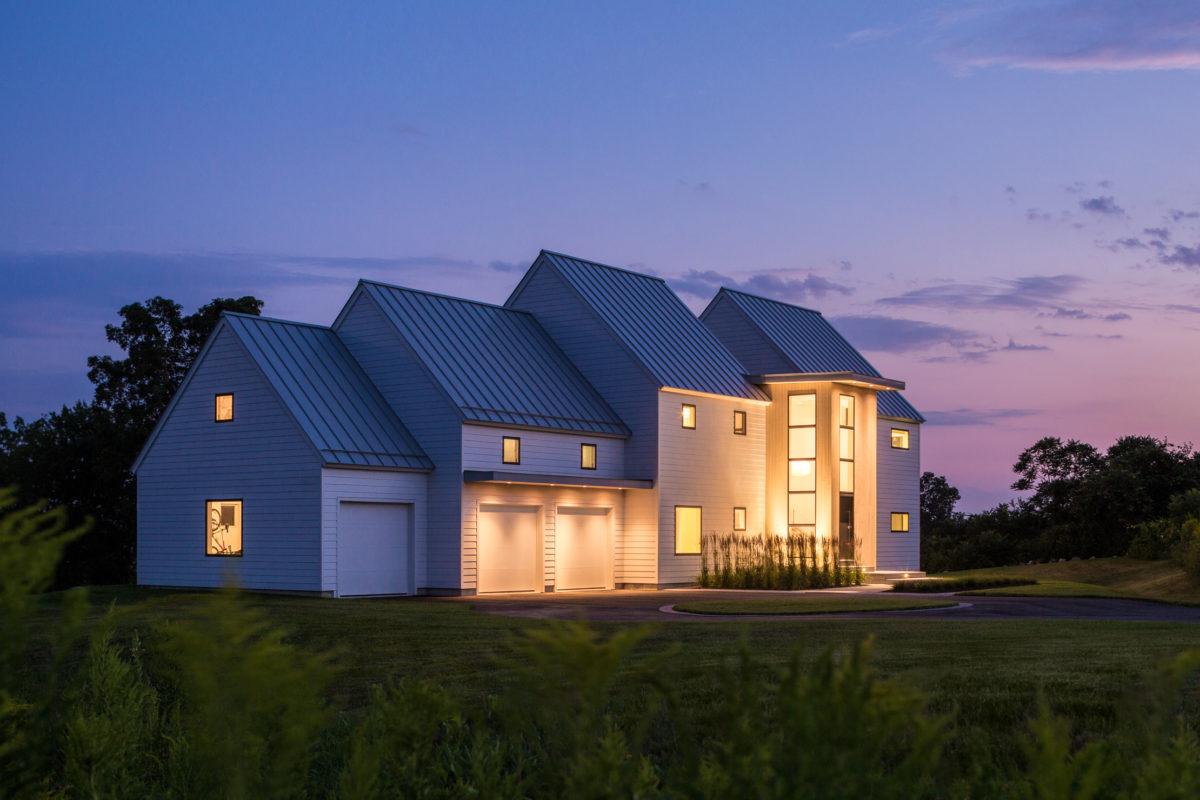

I was asked to be on the judging panel of the 2017 Integrity Red Diamond Achiever Awards. It’s a design contest sponsored by Marvin’s Integrity brand of windows and doors. You can see some of last year’s entries in the slideshow at the bottom of this page. Being on the panel has me thinking about design and how to critique a home.
Design has 15 definitions on dictionary.com. It’s a verb and a noun. Here are four adaptations of those many definitions that seem to cover the meaning as it applies to homes:
As a verb:
- To prepare the preliminary sketch or the plans for a house.
- To plan and fashion artistically the look of a house.
As a noun:
- The organization or structure of a house.
- The combination of details or the motif of a house.
The reason I Googled design in the first place is because a lunchtime discussion this week revealed that I might think about it differently than some of my colleagues. While unpacking the term does boil down to an exercise in semantics, it helps me do the job of design editor.
In my way of seeing it, the design of a home is expressed in the first definitions (for verb and noun), with the keywords being preliminary sketch, plans, organization, and structure. Here are a couple examples of design details that I look for in a home:
- The floor plans work well. The house is well organized with a sensible sequence of spaces from the entry to the private rooms; a smart use of sight lines and connectivity between indoor and outdoor spaces. This is non-negotiable. No trim detail or cool material can make up for a clunky floor plan.
- The scale and massing are right for the site and roof lines and other details support the home’s form. Scale and massing are two of those things that architects and designers get. The rest of us just know when a home looks right and when it doesn’t. If you have one of those two feelings about a home, but aren’t sure why, it’s probably because the scale and massing are either right or they’re off. If you want to learn more about massing, check out this article.
Architects often begin with schematic sketches and massing studies. So, design happens early in the process of planning a home. I also look at structural details, wall, roof, and other assemblies in this way.
The second definitions (for verb and noun), I consider to be about style. Sometimes architectural style and sometimes personal style. Here, the keywords are artistically, look, details, and motif. A couple examples of what I look for in style are:
- Details that make the house identifiable. If the house is a Craftsman Bungalow, are the window patterns, trim elements, and other finish materials appropriate and well executed? If it is a Victorian rehab or replication, are the colors period-appropriate? These things include both exterior details (like siding choice and how it is used) as well as interior details (including flooring and cabinetry).
- Thoughtful exterior and interior details that makes the home cohesive. Here, I’m thinking about homes that do not identify with a formal style. More and more modern homes and transitional homes are eclectic or are blended in style. Fundamental principals of rhythm and balance, skillful use of contrasting and complimentary colors, functionality and texture still apply.
It wasn’t easy to write all that about style without using the word “design.” Like I said, this is verbal gymnastics. Musings. It’s all design and all design should be personal and homeowner specific. No custom house or remodel is well designed if it doesn’t meet the unique needs of the people who will live there. Still, here are a few reasons why I take this view of design:
- Design — as I’ve segmented it here — impacts the structure. The open expanse of a great room has big engineering and structural requirements. That affects how the house will be built. These design decisions can make renovations more (or less) complicated down the road.
- Design reflects the way we live. If we entertain a lot and want an uncluttered, social kitchen, there better be a place to store everything we need to cook and clean with. Like a nice walk-in pantry. Overlooking this type of thing is not necessarily easy to fix down the road.
- To a degree, style can be applied. Two homeowners with similar design requirements as suggested in numbers 1 & 2, could end up with similar floor plans, but can still choose to have very different styles, from rustic to a sleek modern aesthetics. Though traditional floor plans are part of most formal architectural styles, these days even houses with a historic style have more modern floor plans.
- Style is easier to change. This is somewhat of a stretch. But, if you have a Craftsman Bungalow, it’s not going to be easy to change it into a Victorian. But if you’re tired of the poorly stained oak trim and cabinets in your bungalow, you can paint them white and that opens up lots of possibilities for adding more personal style. If you live in a ranch, there’s a tremendous amount that you can do with new fixtures and materials, textures and colors to personalize the style. My point is really that changing and tweaking finishes, surfaces, colors, and textures is generally a more approachable project than correcting bad massing or fixing a floor plan that doesn’t work.
Perhaps this perspective is informed by the practical designers and builders, authors and fellow editors here at FHB. It’ll be interesting to talk to and learn from fellow judges Lou Manfredini, Christine Marvin, and Shawn McCadden next month when we begin to evaluate submissions for the Red Diamond Achiever Awards. If you have a project that you like us to consider, submit it here. And check out the slideshow below to see three of my favorite entrants from last year.
Please click below to see the slideshow of last year’s entries:
Fine Homebuilding Recommended Products
Fine Homebuilding receives a commission for items purchased through links on this site, including Amazon Associates and other affiliate advertising programs.

A House Needs to Breathe…Or Does It?: An Introduction to Building Science
Allison Bailes is great at explaining complex building science topics in simple terms that anyone can understand. If your goal is a new house or remodel that embodies the best practices that building scientists have to offer, buy this book right away.
Get Your House Right: Architectural Elements to Use & Avoid
If you are designing or remodeling a traditional home and want to make sure that you get all the finish details right, this book is for you. Marianne’s drawings are illustrative, covering every aspect of interior and exterior finishes.
Homebody: A Guide to Creating Spaces You Never Want to Leave
Joanna Gaines may have started as a celebrity designer on HGTV, but she’s proven to be the real deal. This book help you understand how and why good design works so that you can recreate it on your own.
-
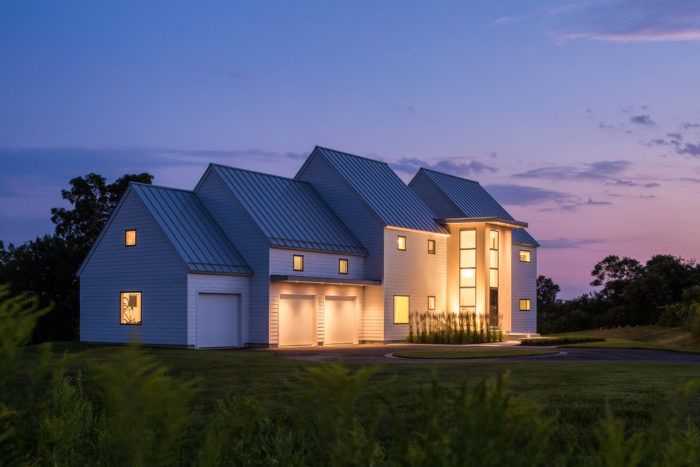
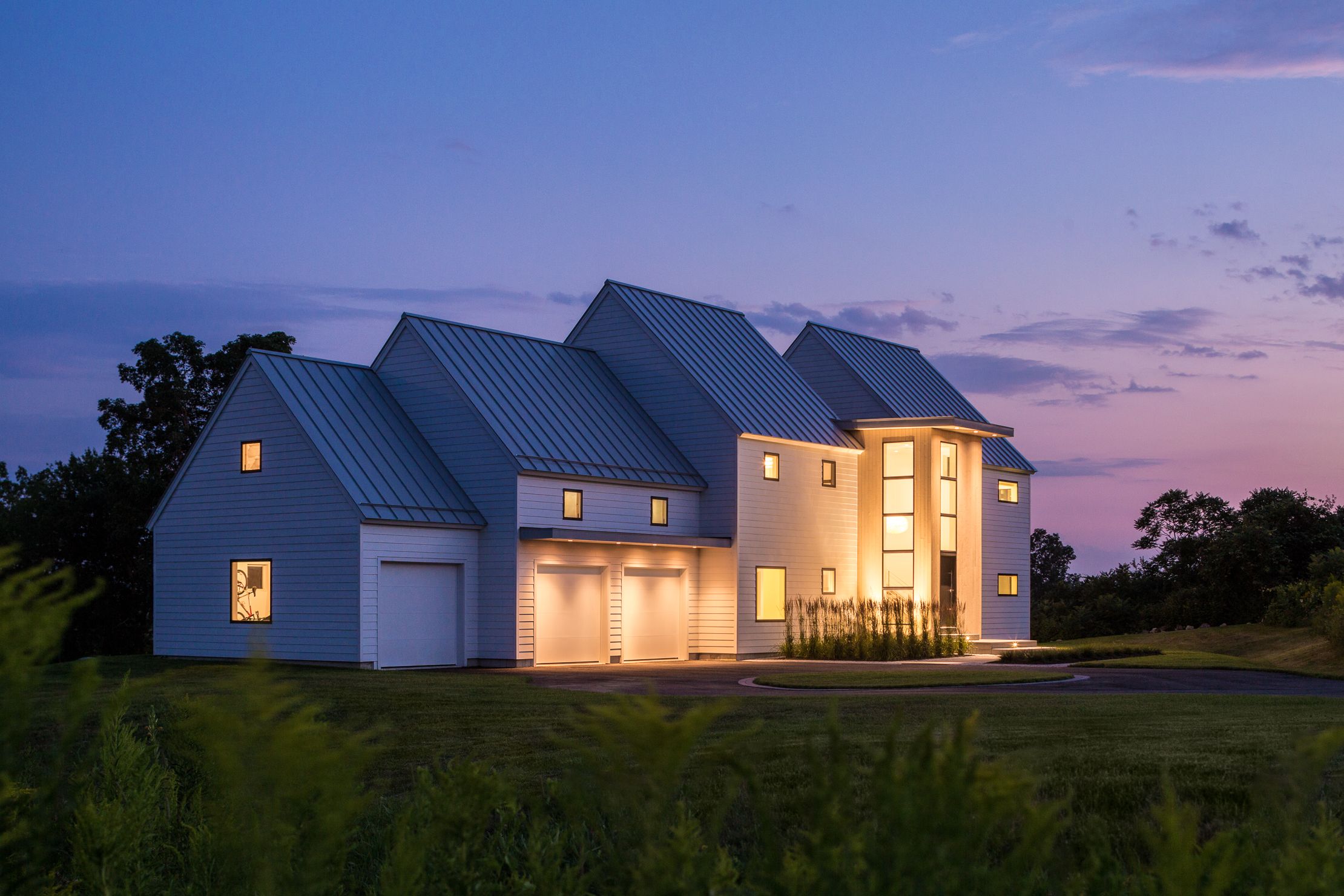
Kevin Browne of Kevin Browne Architecture designed this home in Cape Elizabeth, Maine, and was one of last year’s Red Diamond Achiever Awards winners. The home’s large scale seems to work on its spacious lot and the massing of successively larger modules has a nice rhythm. The entry bump-out calls your attention with a unique siding material and roof form, but has just the right stout proportions to complement the otherwise congruent forms.
-
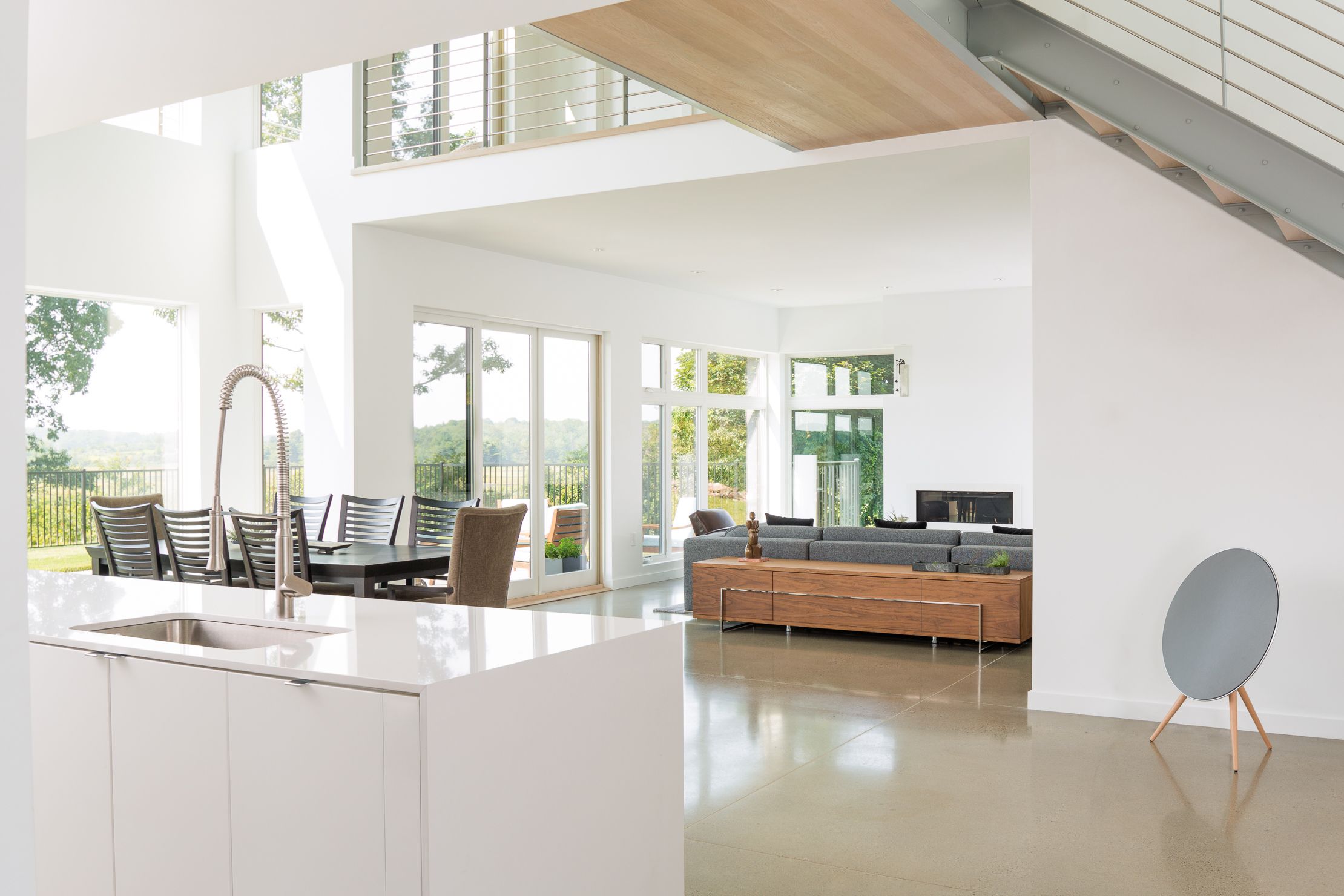
Inside, the style is simple and clean. There are stained concrete floor and natural wood is used sparingly to bring just enough color and texture to the otherwise white surfaces. With lots of glass, the open interior is bright and spacious.
-
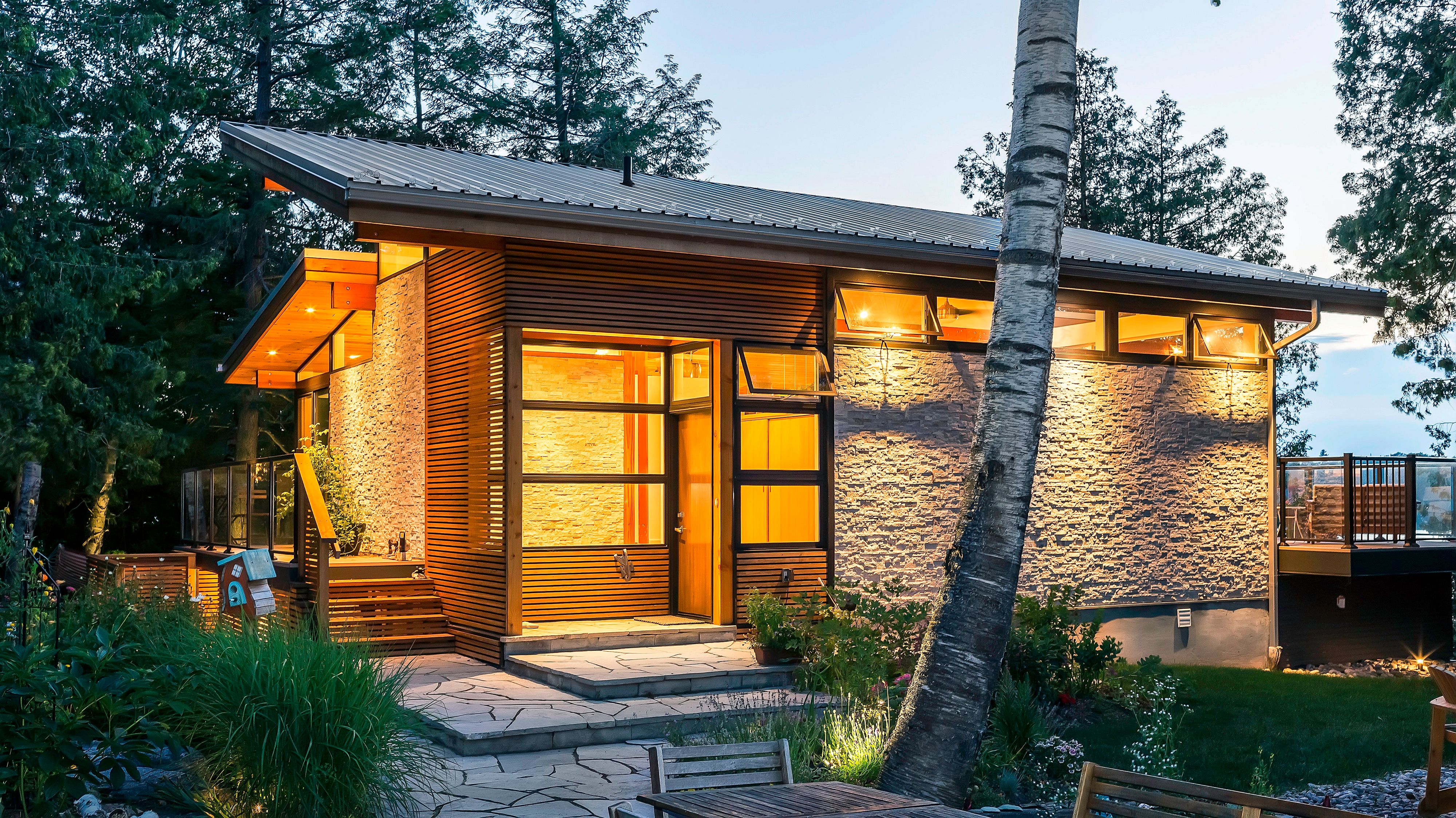
Mark Gildenhaar of Staark Design & Build Inc. in South Frontenac Township, Ont., Canada entered this home in last year’s Red Diamond Achiever Awards. Mark didn’t win, but I think the home deserves an honorable mention. Between the metal roofing, stone, and wood siding, he did a great job of creating interest with texture. The use of glass, in the windows and doors and for the balustrade, blur the boundaries between spaces, inside and out.
-
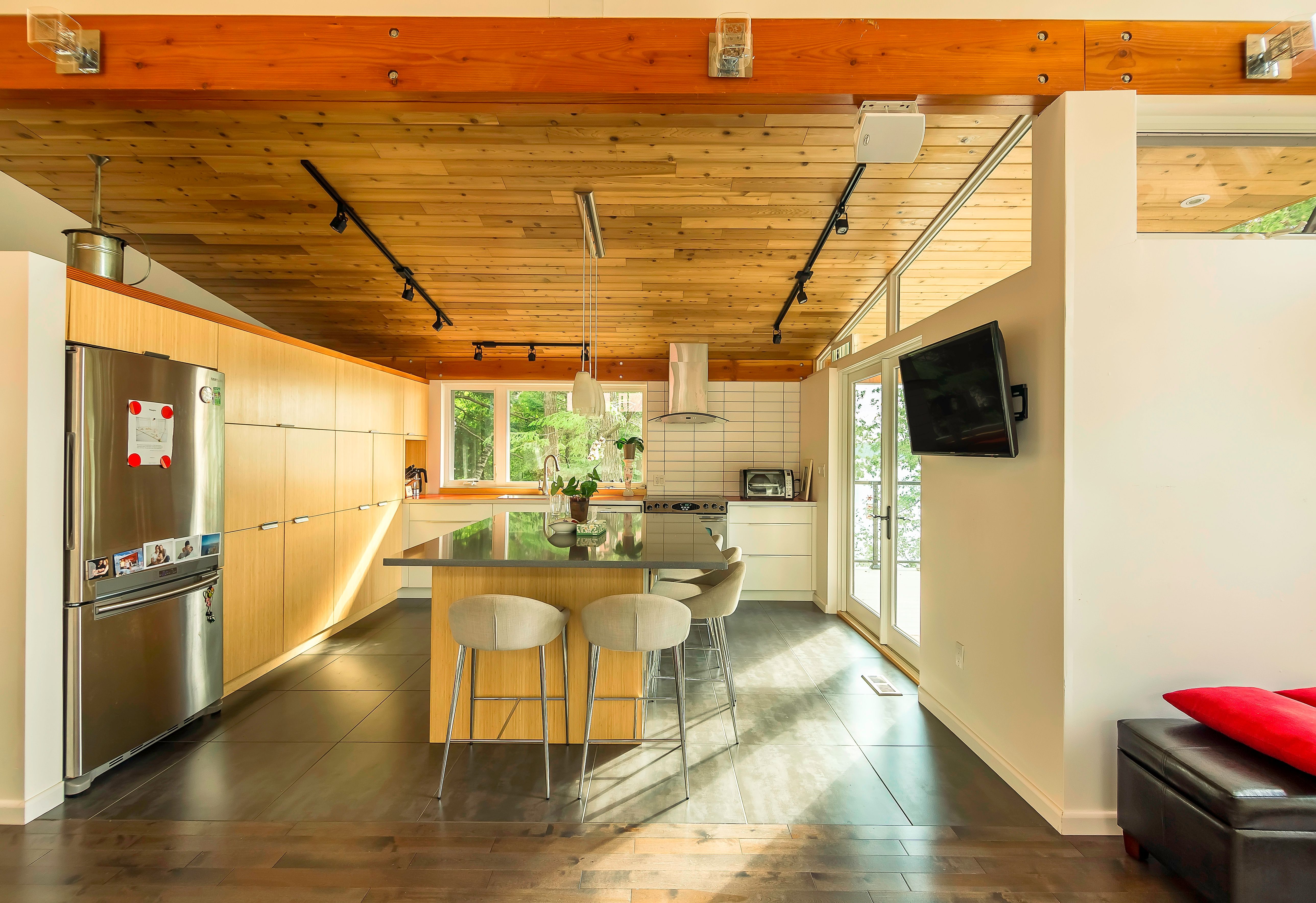
You know you’re in a modern house when bolts replace pegs in big timbers. This kitchen is a geometric wonder. Notice the textures, but also notice how one simple shape, a rectangle, dominates the finishes and creates a theme. The rooflines pay off with clerestory windows and great daylighting.
-
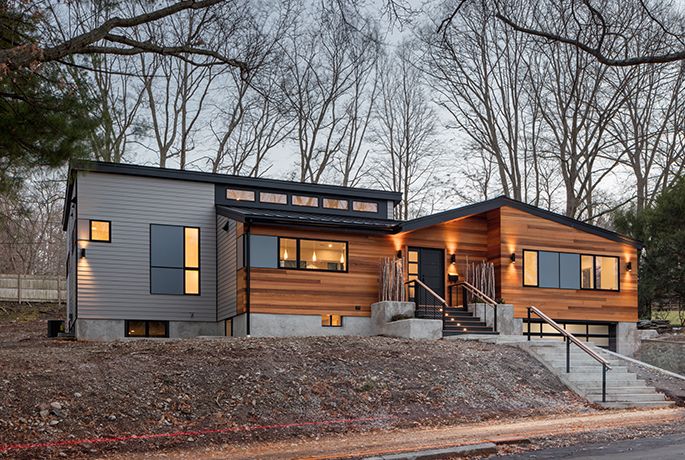
Here another house, a remodel, I’d have considered for the awards if I’d been a judge last year. This one is from Dartagnan Brown of Embarc Studio in Chestnut Hill, Mass., and I appreciate the combination of gable and shed roofs and symmetrical and asymmetrical details. I also like the connection from street to entry and would love to see the landscape complete.
-
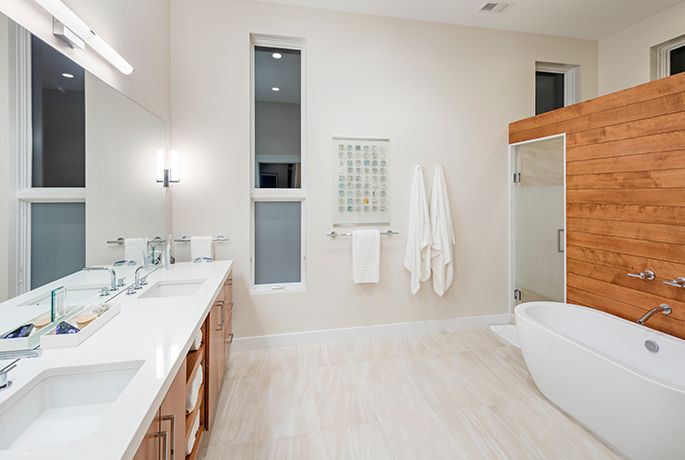
Do I really have to say what I like about this master bath? Not only is it open and spacious and convenient as a master bath should be, but it must feel great in there when sunlight is pouring in through those big windows and reflecting off of that giant mirror to fill the room. But, it’s the tub that I really want!




link